Sunflower Varieties for Cut Flowers: A Comparison for Home Growers
Seed catalogues make sunflowers look like a single decision: yellow, tall, cheerful. In a cutting garden they are anything but. Two plants with nearly identical flowers can give you one long, flawless stem about two months after sowing, or a dozen shorter ones spread across an entire summer. The difference between a bouquet that sulks after four days and one that holds for ten usually comes down to the type you sowed, not your skill with the snips. So before you fall for a photograph, it helps to know which of the three main groups you are buying into: single-stem, branching, or pollen-free.
Sunflowers are sorted commercially by how they grow rather than what they look like. Single-stem types put all their energy into one flower on one tall stalk. Branching types make a central head and then keep going, throwing side shoots from the leaf axils over many weeks. Pollen-free is a separate trait that cuts across both: it describes the absence of the dusty yellow anthers that shed over tables, sleeves and car seats, and it appears in some of the best cutting varieties in either habit.
Choosing between them is mostly a question of what you want the harvest to do. Uniform stems for arranging in bunches, or a long trickle of flowers for the kitchen windowsill.
This is the group florists buy. Varieties such as the ProCut series and the Sunrich range produce a single strong stem, typically somewhere between 1.2 and 1.7 metres in good soil, with a flower that opens cleanly and evenly. Because nothing is diverted into side shoots, the stem is thick, straight and easy to strip. Vase life is generally the best of the three groups: a well-conditioned stem cut at the right moment will hold a week or more, and often closer to ten days in cool conditions.
The trade-off is brutal simplicity. One seed, one flower. If a stem snaps in wind or a rabbit finds the bud, that plant is finished for the year. And you must not pinch single-stem types. Pinching out the growing tip to encourage bushiness, a habit worth having with almost everything else in the garden, will cost you the flower entirely.
Because they take up so little room per stem, single-stem types suit close planting and succession sowing. Set them about 15 centimetres apart in a block rather than a thin row, so the plants lean on each other in wind, and sow a short row every ten to fourteen days from late spring into early summer. A three-metre row at that spacing gives you roughly twenty plants and twenty stems per sowing; three sowings spread six weeks apart will keep a bucket on the go from midsummer into autumn. That is a realistic cutting garden for most backyards.
Branching varieties, including Soraya, Autumn Beauty, Italian White and the deep red Moulin Rouge, take longer to reach their first flower, often two to three weeks more than a single-stem type. Then they carry on. The central head opens first, and cutting it promptly is what tells the plant to push energy into the side shoots below. From there you can pick repeatedly, usually right up to the first hard frost.
The stems are the compromise. They are shorter and thinner than single-stem stems, and they get shorter as the season wears on, so the last flush is best suited to jam jars and low table bowls rather than tall arrangements. Branching plants also need real space: 45 to 60 centimetres between them, or the side shoots will tangle and the stems will curve towards the light. In an exposed site, later stems may need a stake or a horizontal grid of twine to keep them upright.
For a home grower who wants flowers for the house over months rather than a single haul, branching types are the more generous choice, and the more forgiving of a missed sowing date.
Standard sunflower pollen is vivid yellow, and it transfers. A single head brought indoors will dust a tablecloth, a white shirt or a painted sill, and the stains are not shy. Pollen-free varieties, most famously the ProCut and Sunrich lines, simply do not shed it. If your flowers are destined for the dining table, a gift or a wedding, this trait is worth more than any colour in the catalogue.
It is not the same as nectar-free, and it is worth saying so plainly: pollen-free single flowers still feed bees and other insects visiting for nectar. Fully double varieties such as Teddy Bear, where the centre is hidden under a puff of petals, are the ones pollinators struggle to use. Lovely in a vase, less useful in a wildlife garden, and usually shorter-lived once cut because those dense heads hold moisture and rot faster.
Variety sets the ceiling, but handling decides where you land under it. Sunflower stems are coarse and hairy, and the foliage rots quickly in water, which is the single most common reason a bouquet goes limp by day three.
A drop of household bleach in a litre of water, or a commercial flower food, will slow the bacterial build-up that clouds the water and blocks the stems.
Stem length is partly genetics and partly conditions. Sunflowers want full sun and a decent, deep soil; their taproot resents disturbance, which is why direct sowing almost always beats transplanting. Given that, put the tall single-stem types at the back or along a fence, branching types where you can reach them from both sides, and dwarf doubles at the front. Plant in blocks rather than single rows, and the planting supports itself through the windiest fortnight of the year.
One practical note: sunflower residues can suppress growth in the following crop, so rotate where you plant them rather than returning to the same strip every season.
Sow one pollen-free single-stem variety in three successions a fortnight apart for your best stems. Add a small block of branching types for the late-summer jars, and a few doubles for the table if you have room and patience. Then keep a notebook: sowing date, first flower, stem length, and how many days each type lasted in the vase. Two seasons of your own notes will teach you more about which sunflower belongs in your garden than any catalogue description.
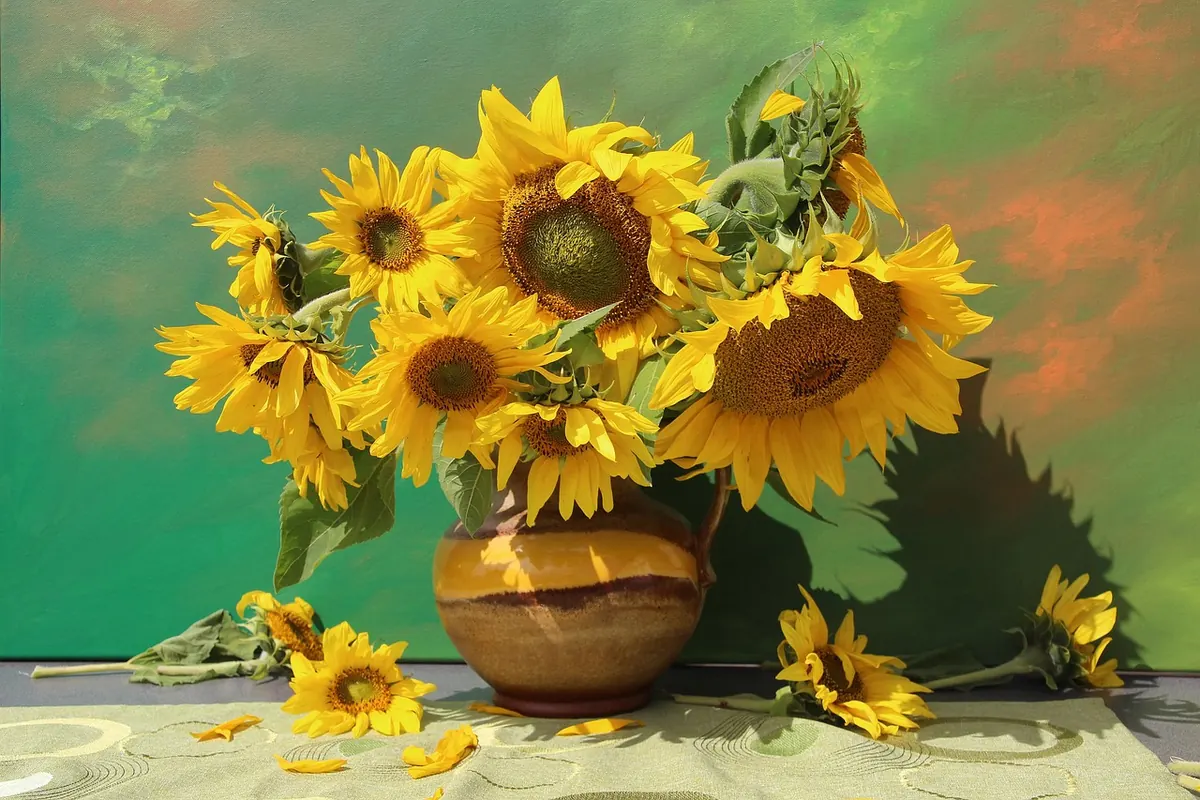
Photo: GuentherDillingen / Pixabay
Previous Post
10 Common Sunflower Growing Mistakes and How to Fix Them
Next Post
How to Plan a Sunflower Field Visit Around Sunset