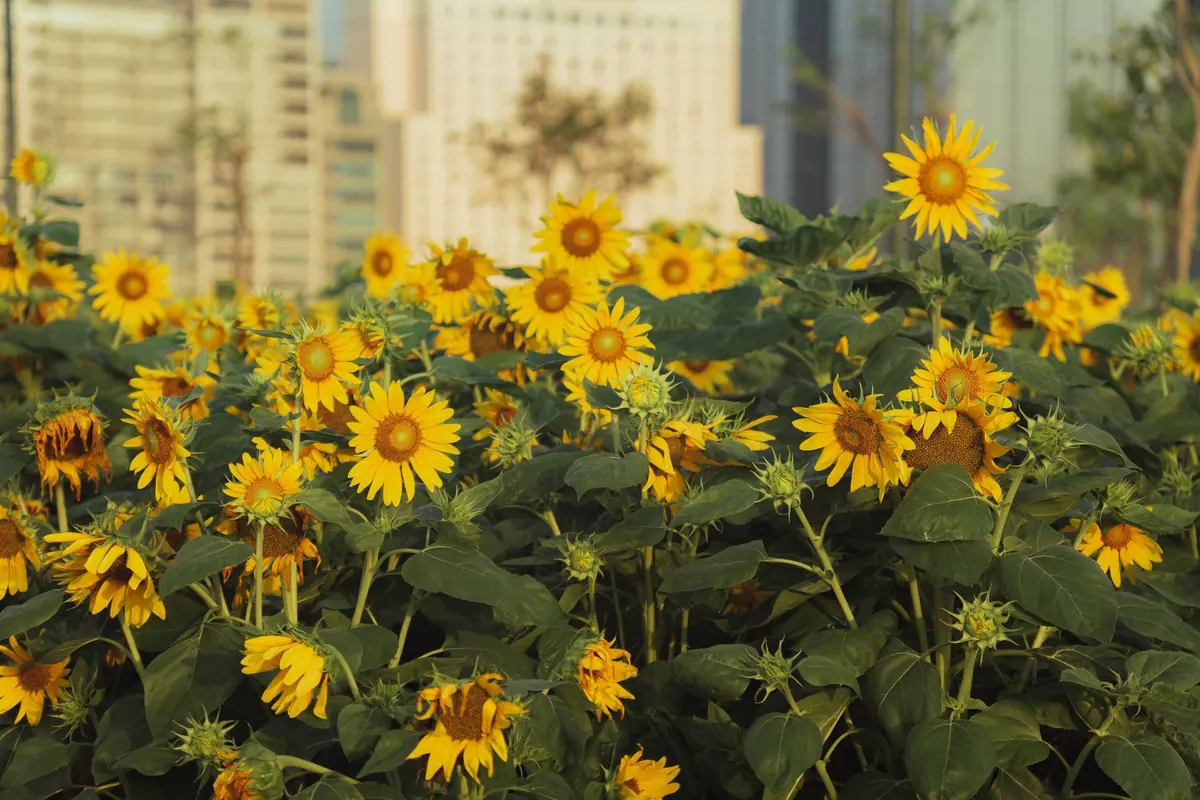
How to Grow Sunflowers from Seed in Small Spaces: A Balcony and Container Guide

A sunflower on a balcony sounds like a small act of optimism, and it is. It also works. Dwarf and semi-dwarf varieties rarely pass chest height, they flower in roughly ten to twelve weeks from sowing, and a single well-grown plant can give you a dozen blooms between midsummer and the first cold nights. The trick is not enthusiasm. It is matching the variety to the pot, the pot to the railing, and the watering can to the weather. Get those three things roughly right and the rest is mostly patience.
Sunflowers send down a taproot before they do much of anything above ground. That single fact shapes everything about growing them in containers: they want depth, they resent being moved, and they sulk in shallow trays. It also means the variety matters more than the technique. A tall farm variety in a balcony pot is a heartbreak waiting to happen; a compact one in the same pot is a small celebration.
Look for seed packets labelled dwarf, patio, or container-friendly, and read the height carefully. Heights are usually given for plants in open ground with generous sun, so assume yours will run a little taller or lean a little harder toward the light.
If you want flowers for a vase, choose pollen-free types — they last longer indoors and don't dust your windowsill in yellow.
For most dwarf sunflowers, aim for at least 25 to 30 litres of compost and a depth of 30 cm or more. The smallest varieties will manage in 10 to 15 litres, but they will dry out faster and flower on a smaller scale. Width matters too: a pot that is wider than it is tall holds moisture more evenly and gives the roots room to spread sideways.
Drainage is not negotiable. One blocked hole in a rainy week is enough to rot a taproot, so check before you fill. Terracotta breathes and looks right on a stone balcony but dries out quickly in wind; plastic holds moisture longer and is far lighter to move. Dark pots heat up in strong afternoon sun, which stresses roots, so shade the pot rather than the plant if you can.
Two practical notes. First, a full 30-litre pot of damp compost is heavy — put it where it will stay before you fill it, and check what your balcony is rated to carry. Second, tall plants catch wind like sails. A corner spot, a wall behind the pot, or a railing to tie to makes a real difference on an upper floor.
Use a peat-free multipurpose compost mixed with roughly a quarter grit or perlite by volume. Sunflowers are not fussy about richness, but they are fussy about wet feet, and the grit is what saves you. Add a slow-release organic feed at planting time and you can forget about feeding for the first month.
Succession sowing is the quiet secret of a long season. Sow a second pot three or four weeks after the first and you will have flowers in September instead of a single flush in July.
Water deeply and less often rather than little and often. Push a finger into the top 2–3 cm; if it is dry, water until it drains. In hot weather a large container may need water every morning, and a saucer underneath buys you a few hours of grace. Water the soil, not the leaves, and try to do it early so foliage dries before evening.
Sunflowers want direct sun for most of the day — six hours is a reasonable minimum. They also turn as they grow, so give the pot a quarter turn once a week to keep stems straight instead of permanently hooked toward the window.
Once buds appear, switch to a tomato-type liquid feed every fortnight. Avoid high-nitrogen feeds: they produce big soft leaves and disappointingly few flowers. If leaves yellow early, a dilute seaweed feed usually sorts it out.
Stake anything above about 80 cm, and stake it early so the roots aren't damaged later. A bamboo cane set at the back of the pot with soft twine in a loose figure of eight works fine; tight loops cut into stems as they thicken. On windy balconies, group pots together so they shelter one another, and check ties after every storm.
Cut stems in the cool of the morning, at an angle, just as the petals unfurl. Strip the lower leaves and stand them in deep water for an hour before arranging. For seed, leave one head on the plant until the back turns brown and the seeds loosen under your thumb, then dry it upside down in a paper bag and store the seed somewhere cool and dry. Home-saved seed from open-pollinated varieties will usually come true; named hybrids may surprise you.
Sow in deep pots, thin ruthlessly, water deeply in the morning, turn the pot weekly, stake before you think you need to, and feed once buds show. Keep a saucer and a spare cane on hand, and don't panic if the first flower faces the wrong way for a day — it will find the light. Give a compact sunflower decent soil and steady water, and it will give you an entire summer of bright, uncomplicated colour from a single square metre of concrete.
Photo: nattanan23 / Pixabay